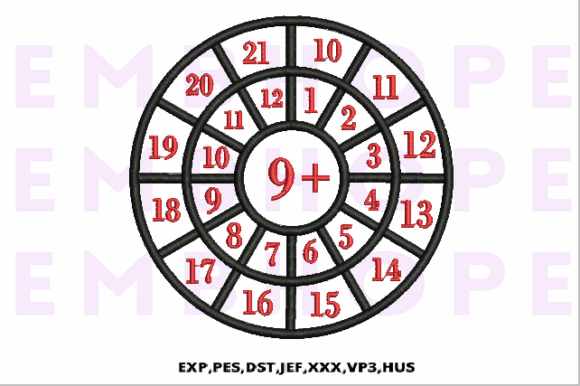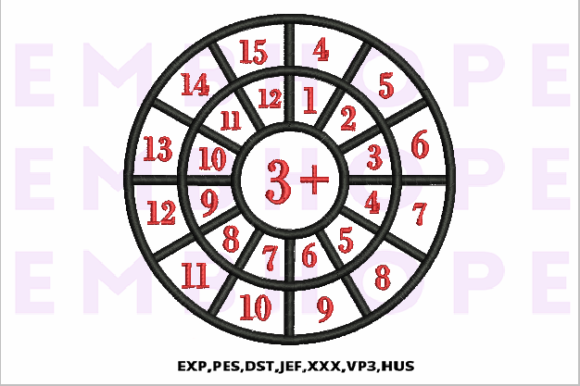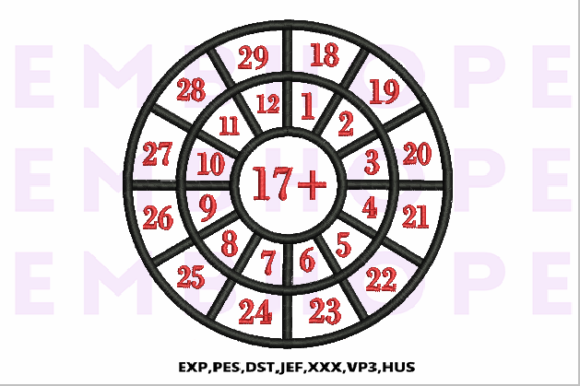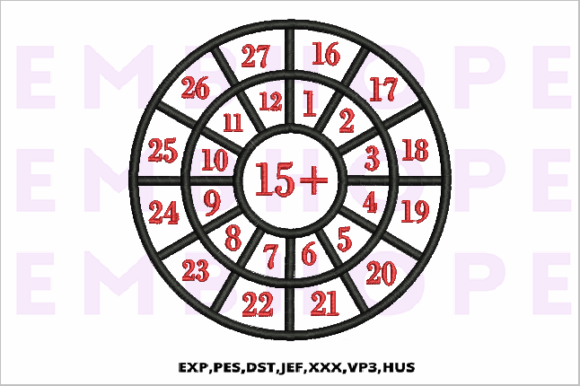
Addition Wheel 19: A Smart Embroidery Design for Branded Merch
First Impressions: Playful, Educational, and Ready for Business
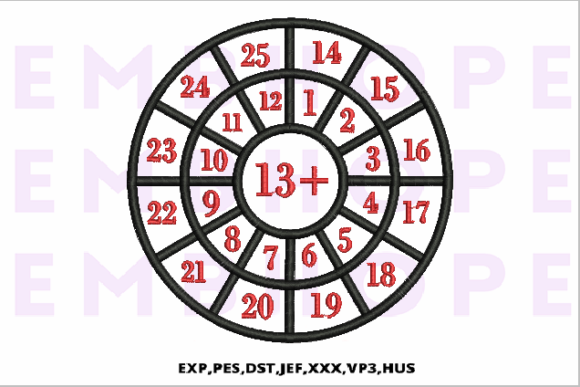
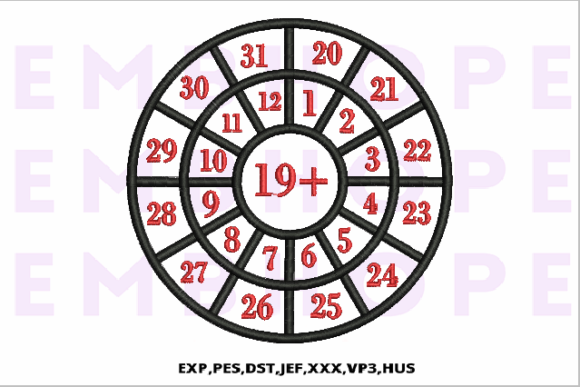
The Addition Wheel 19 immediately stands out as a design that blends learning with visual appeal. While the product description hints at its School category roots, its vibrant and cheerful aesthetic makes it surprisingly adaptable for small business branding. Whether you're an embroidery shop or a boutique owner looking to add educational flair to your merchandise, this machine embroidery design feels both professional and approachable.
From a design standpoint, it carries a playful tone that’s perfect for businesses targeting families, educators, or creative learning spaces. The circular layout suggests structure and balance—ideal for creating a sense of order in visual branding, especially when used as a logo accent or patch.
Real Business Use: From Patches to Product Packaging
Let’s break down where the Addition Wheel 19 shines in real-world business applications:
- Embroidered patches – Its circular shape makes it ideal for sew-on or iron-on patches. It’s clean and legible, especially when used as a themed accent for handmade educational kits or Etsy store bundles.
- Staff uniforms – As a chest or sleeve logo, it adds a subtle yet recognizable touch. Great for small businesses with a learning or creative focus—think tutoring centers, craft studios, or after-school programs.
- Apron embroidery – Works well centered on the chest or as a corner accent. Its size and layout are well-suited for fabric texture variations found in cotton or linen aprons.
- Cap embroidery – The round format fits naturally on the front or side of caps. However, keep in mind the level of detail and adjust scaling accordingly.
- Tote bag design – A perfect conversation starter on tote bags sold at educational fairs or local markets. It reads clearly and maintains visual interest even at a distance.
- Product packaging accents – Use it as a branded sewn-in label or embroidered tag on handmade goods to reinforce a thoughtful, detail-oriented brand identity.
Where to Use It Carefully: Know Your Limits
While the Addition Wheel 19 is versatile, there are a few production points to consider before embroidering:
- Small patch sizes – Due to the inner number detailing, shrinking the design too much may cause the numbers to blur or lose clarity.
- Cap fronts – The curvature of a cap can distort the circular layout. Always test on a sample cap before bulk production.
- Tiny lettering – If the design includes small text elements, be cautious about legibility when resizing.
- High stitch density – This can lead to stiffness on soft fabrics. Test with different stabilizer types to maintain comfort and durability.
- Textured fabric – While it works well on standard cotton, it may require adjustments on heavier or uneven materials like denim or felt.
- Dark uniforms – Consider thread color contrast carefully. A bright palette will help the design stand out on darker garments.
- Frequent washing – High stitch count and tight spacing can affect longevity. Always test for wear resistance, especially on staff apparel.
Brand Identity Impact: More Than Just a Design
When used thoughtfully, the Addition Wheel 19 becomes more than just an embroidery file—it evolves into a meaningful part of your brand identity. For small businesses, especially those in education, creativity, or child-focused niches, this design subtly reinforces your values: learning, playfulness, and attention to detail.
It boosts customer trust by signaling intentionality in your merch creation. Whether it's on a tote bag sold at your boutique or a patch on your team’s aprons, it contributes to a cohesive and professional image. It also enhances product value by adding a tactile, handmade quality that digital printing alone can’t replicate.
From a visual consistency standpoint, this design works well alongside other design assets like logos, icons, and pattern motifs. It complements both modern and vintage aesthetics, making it easy to integrate into existing branding systems.
Practical Notes for Embroidery Designers
Before using the Addition Wheel 19 in a commercial setting, here are some key checks every embroidery professional should perform:
- Test in black and white first – Helps identify clarity and contrast issues before committing to color threads.
- Check small patch size performance – Ensure numbers remain legible and lines don’t merge.
- Review thread color contrast – Especially on dark or textured backgrounds.
- Inspect spacing and outlines – Make sure inner elements don’t crowd each other when resized.
- Confirm hoop size – Always verify that the design fits within your machine’s capabilities before stitching.
- Test on real fabric – Different materials behave differently under stitching stress.
- Use proper stabilizer – Especially for soft or stretchy materials like knits or lightweight cotton.
- Create a mockup for client approval – Use a printable mockup to show how the design looks on the final product.
- Compare with other design assets – Ensure it aligns visually with your other embroidery files and branding elements.
- Confirm commercial licensing – Before using for small business merch, verify that the design allows for resale and commercial use.
Final Thoughts: A Thoughtful Addition to Your Design Library
The Addition Wheel 19 is more than a clever educational design—it’s a smart, flexible digital embroidery file that can elevate your custom apparel and handmade product offerings. Whether you're creating staff uniforms for a local bakery, tote bags for a tutoring center, or patches for a school supply Etsy shop, this design delivers both function and charm.
As with any commercial embroidery project, attention to detail in testing and application is key. But with the right approach, the Addition Wheel 19 can become a go-to element in your brand identity toolkit—helping you stitch together a memorable and professional image, one thread at a time.